

Bhagavad Gita – Saankhya Yoga Chapter 2: Verse 58 yada samharate cayam kurmo nganiva sarvasah | indriyanindriyarthebhyas tasya prajna pratisthita || 2.58 Bhagavad Gita (Song of God) is a timeless treatise on the essence of living enlightenment. The Gita was imparted by the enlightened Hindu incarnation Sri Krishna to the warrior-prince Arjuna over 5000 years ago. Amazingly, the spiritual wisdom and life solutions offered in the Gita are so universal and current that it is even today used as a personal transformation guide. In this talk on Bhagavad Gita, Chapter 2, Verse 58, Paramahamsa Nithyananda shares his personal experience with Sri Krishna’s message. The verse instructs us that when we withdraw our senses from outward stimuli in the same way that a tortoise withdraws into its shell, our spiritual understanding becomes steady. Paramahamsa recalls grasping this concept strongly upon first seeing a tortoise in action as a boy. He comments that the clarity of Sri Krishna’s image is so sharp it needs no embellishment. When we transform our awareness and focus on our inner space, we discover that the source of all joy lies within ourselves. We accept our evolutionary destiny: to end our dependence on external events. This does not mean we don’t interact or enjoy the outer world, but it no longer disturbs our stability. Skanda Sashti Brahmotsava Skanda Sashti Brahmotsava celebrations continued today with Lord Subramanya being taken on a procession in his golden palanquin specially decorated for this occasion. At the Sri Nithyanandeshwara temple Lord Subramanya received the Divine Spear (Vel) from Devi Nithyanandeshwari. In the Hindu mythology, Goddess Parvati presented the Vel to her son Murugan (another name for the Lord Subramanya) as an emobodiment of her Shakthi (Power and Energy) to vanquish the evil asura Soorapadhman. According to the Skanda Purana and its Tamil version, Kanda Puranam, in the war between Murugan and Soorapadman, Murugan used his Vel to defeat all the evil forces of Soorapadhman. When a complete defeat for Soorapadman was imminent, the asura transformed himself in to a huge mango tree to evade detection by Murugan. Murugan, not falling for the deception, hurled his Vel and split the mango tree in to two halves, one becoming a rooster and the other a peacock. Murugan, henceforth, had the peacock as his Vahanam and the rooster became the emblem on his battle flag. The Vel became the symbol of courage and of the triumph of good over evil. 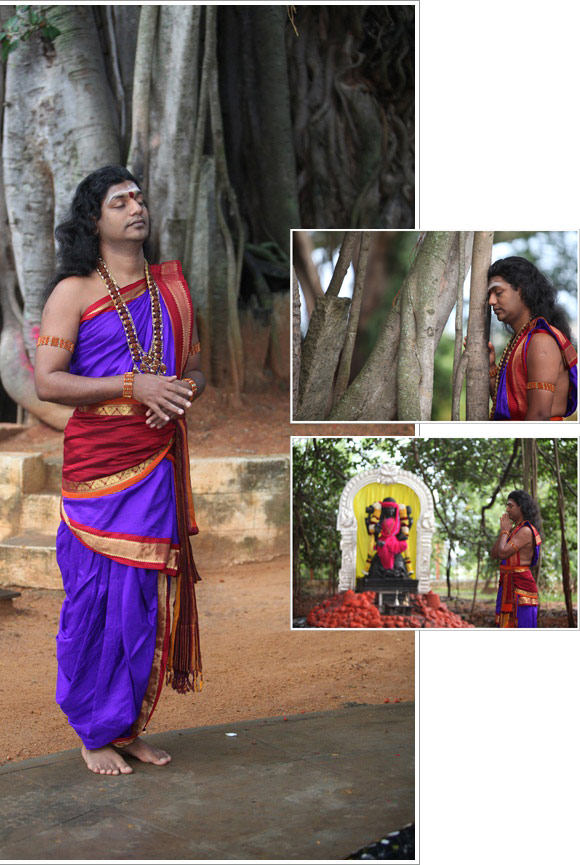 Swamiji at the temple under the sacred Banyan tree...
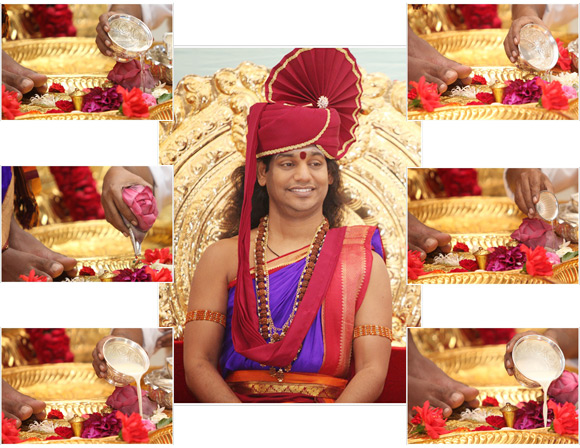 Pratyaksha Pada puja in progress...
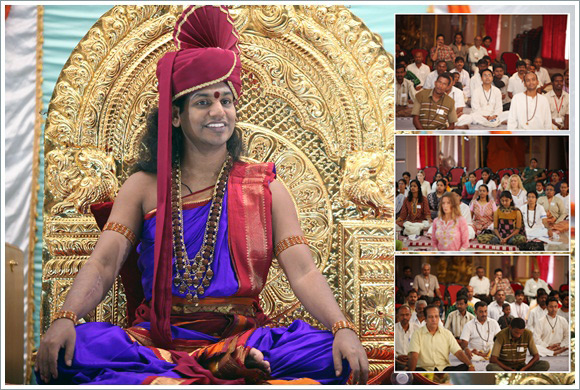
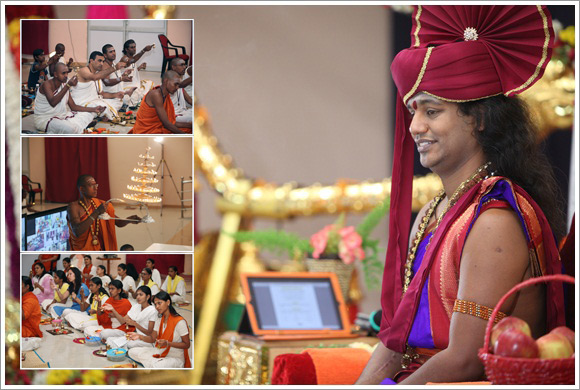 Swamiji speaks on Bhagavad Gita - Chapter 2; Saankhya Yoga, Verse 58
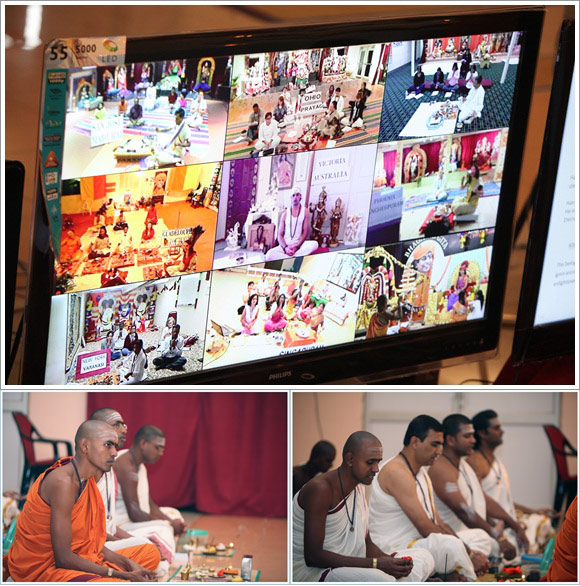 Devotees & Disciples all around the world listens to Swamiji's satsang
 Swamiji starts the Nithya Kriya for Depression care...
 Swamiji guides the devotees & disciples step by step to Nithya Kriya
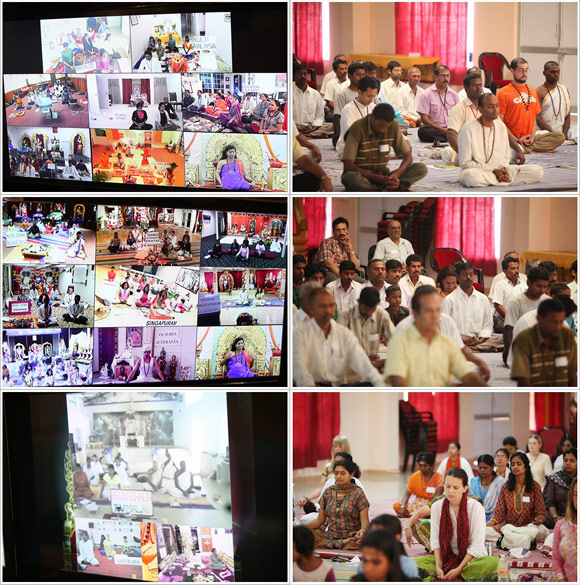 Devotees & Disciples all around the world undergoes the Nithya Kriya process...
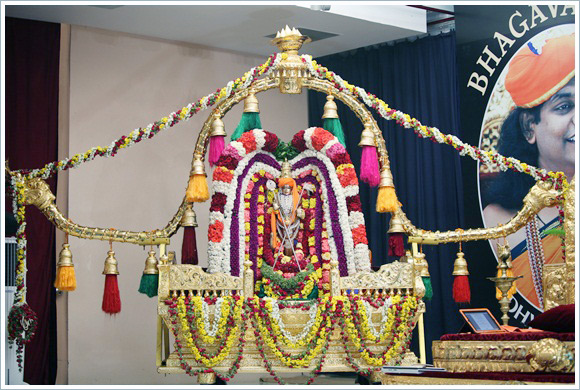 Lord Subramanya decorated beautifully in the Golden Palanquin
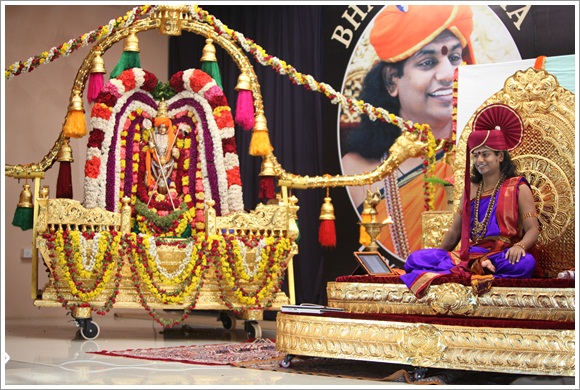
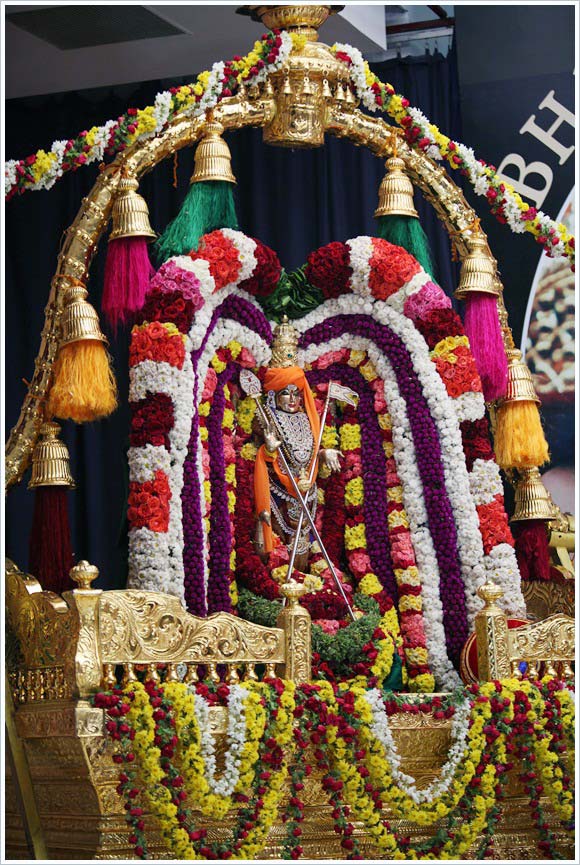 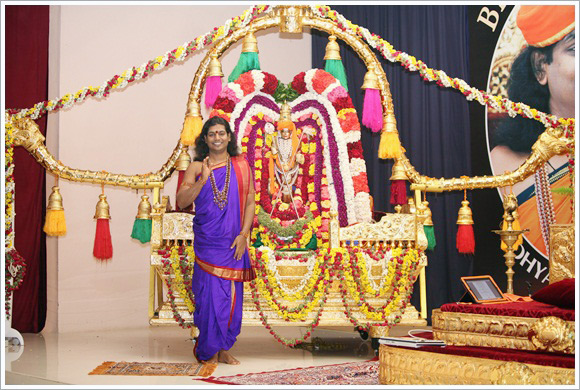 Swamiji along with Lord Subramanya in golden palanquin
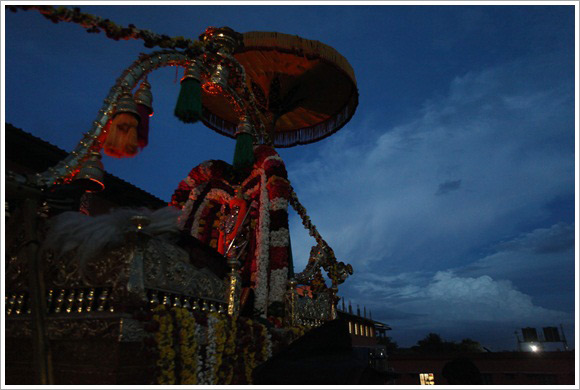 Golden Palanquin under the Deep blue sky in the evening ready for the procession...
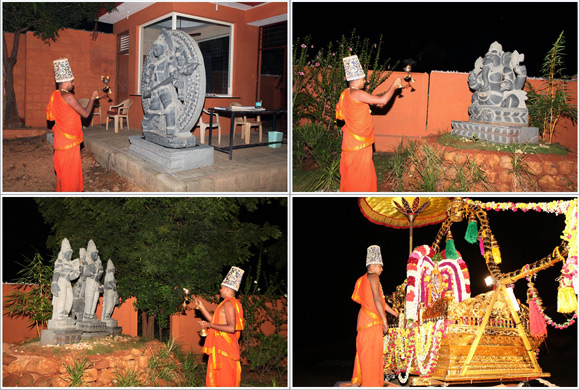 Arati for Kalabhairava, Lord Ganesha, Lord Subramanya...
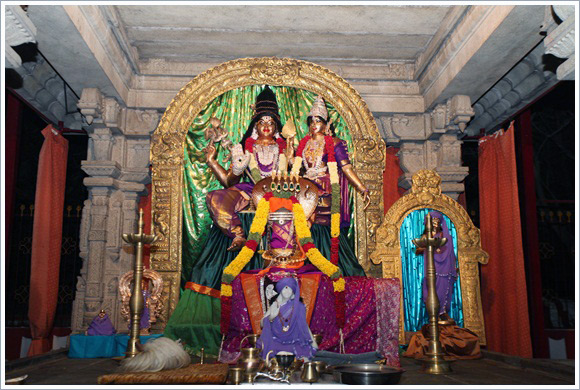 Sri Anandeshwara & Anandeshwari awaits Lord Subramanya's procession to end in the temple...
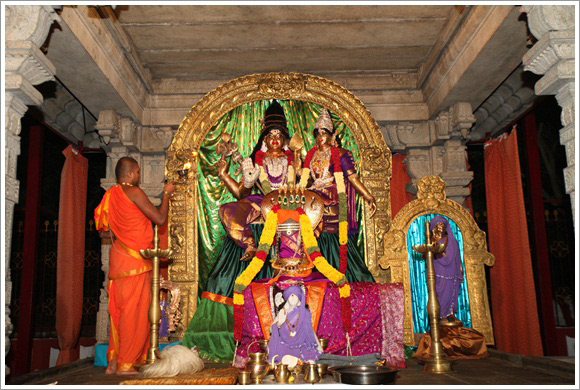 Arati by the temple priest...
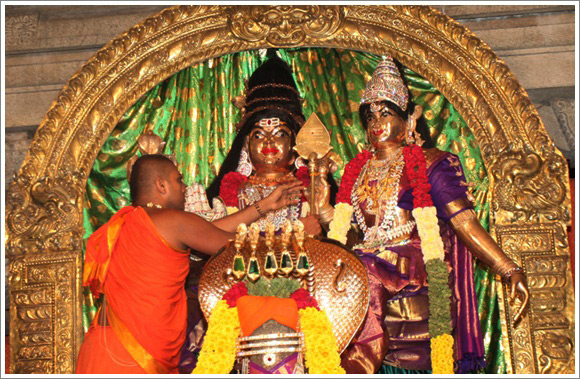 In the Hindu mythology, Goddess Parvati presented the Vel to her son Murugan (another name for the Lord Subramanya) as an emobodiment of her Shakthi (Power and Energy) to vanquish the evil asura Soorapadhman.
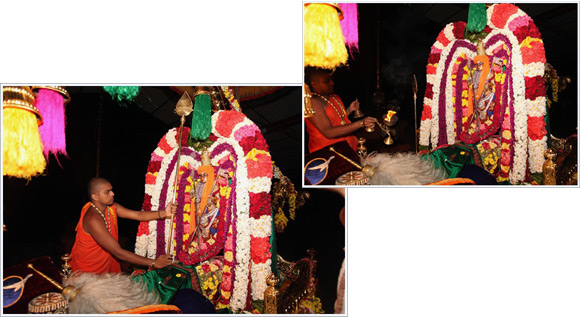 According to the Skanda Purana and its Tamil version, Kanda Puranam, in the war between Murugan and Soorapadhman, Murugan used his Vel to defeat all the evil forces of Soorapadhman.
|
Recent Photo Galleries - ThumbnailsPhoto Gallery Categories
Tag Cloud
intelligence
(1)
kundalini
(3)
love
(2)
management
(1)
meditation
(1)
mind
(1)
pada puja
(1)
satsang
(1)
success
(1)
surrender
(1)
 |


